
The Guardian: Taking responsibility for belief

Part of The Guardian’s series, “Can we choose what we believe?”

Are we responsible for what we believe? Do we have a choice in the matter? This is not just a philosophical question but one that has considerable relevance to modern life.

At every point throughout history we have treated people as if they choose to believe. The Spanish Inquisition’s treatment of its hapless victims assumed that they could have avoided their heresies. The Chinese government treats Falun Gong practitioners as if they freely flout the law. More controversially, if US authorities end up executing Khalid Sheikh Mohammed, a Pakistani accused of plotting the 9/11 attacks, they will imply that he chose to believe he was on a mission from God and that he could have chosen to believe otherwise – and this raises issues about the alleged use of indoctrination in the spreading of extremism and the training of suicide bombers.

Continue reading “The Guardian: Taking responsibility for belief”
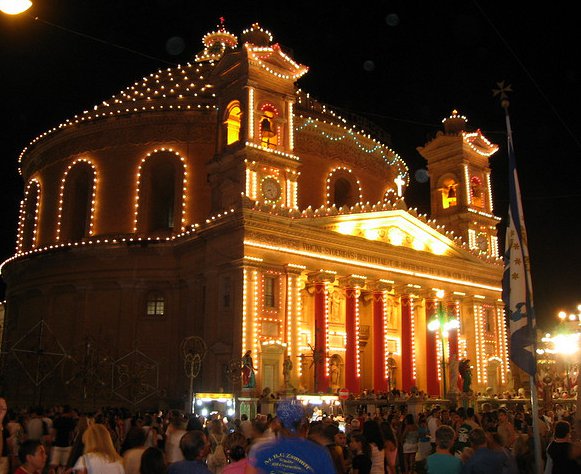
The Guardian: Divorce, Maltese style

Crowds gather outside a church during the festival of Santa Marija in Malta. The Church's influence on the island is one of the main reasons for divorce remaining unavailable. Photo by Julien Lozelli

On Sunday, Malta Labour party MP Adrian Vassallo announced that he will be standing down over plans to allow couples to divorce.

Let me explain. It may surprise some of you to learn that in Malta, a member of the Commonwealth and an EU state, divorce is still illegal. And this isn’t one of those outdated laws that they somehow never got around to changing, like cab drivers not being able to pick up people infected with plague. Malta was a British colony until 1964, and though divorce has been allowed for an elite few in British law for centuries, and for all citizens since 1857, banning divorce is something the Maltese people chose to do during the 1960s, by omitting it from their new constitution entirely. In the deeply Catholic nations of the Mediterranean this was relatively common at the time. Divorce was still illegal in countries like Italy, Portugal and Spain, and even in the Republic of Ireland. But these places all legalised divorce in the period between 1971 and 1994. Somehow Malta has found itself one of only two countries left in the world where divorce is still illegal, along with the Philippines.

Continue reading “The Guardian: Divorce, Maltese style”